
For many buyers, owning a home surrounded by protected dunes, pristine beaches, and preserved coastal landscapes represents the ultimate seaside lifestyle. Yet purchasing property inside a federally protected coastal zone is very different from buying a traditional waterfront home.
National Seashore properties operate under a unique combination of federal oversight, local zoning regulations, environmental protections, and private ownership rights.
Unlike standard residential transactions, homes within a National Seashore often involve additional legal review, permitting limitations, and long-term land stewardship responsibilities.
Buyers must understand not only property ownership laws, but also how federal preservation goals affect future use, renovations, resale opportunities, and inheritance planning.
Whether you are considering a vacation retreat, retirement property, or long-term coastal investment, understanding the complexities of buying National Seashore property is essential before entering the market.
These unique homes are governed by specialized national seashore real estate regulations designed to preserve fragile coastal ecosystems for future generations.
How Does Buying National Seashore Property Work
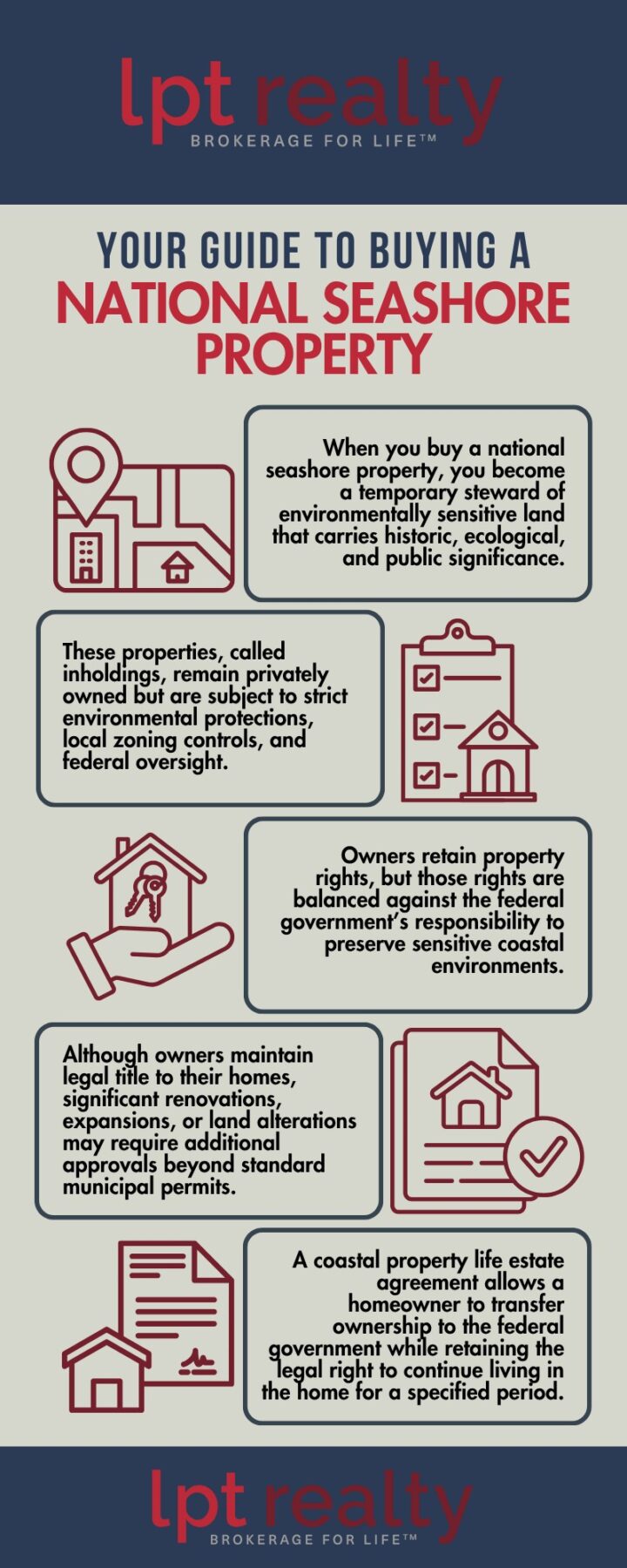
Buying national seashore property involves purchasing privately owned land located within federally protected park boundaries. These properties, commonly called inholdings, remain privately owned but are subject to strict environmental protections, local zoning controls, and federal oversight intended to preserve the surrounding coastal landscape and natural resources.
What Are National Park Service Inholding Rules
Understanding Private Inholdings
Inholdings are privately owned parcels of land located inside the boundaries of a federally protected National Seashore.
These properties typically existed before the federal government established the protected area, allowing the land to remain under private ownership even after the surrounding region became part of the National Park system.
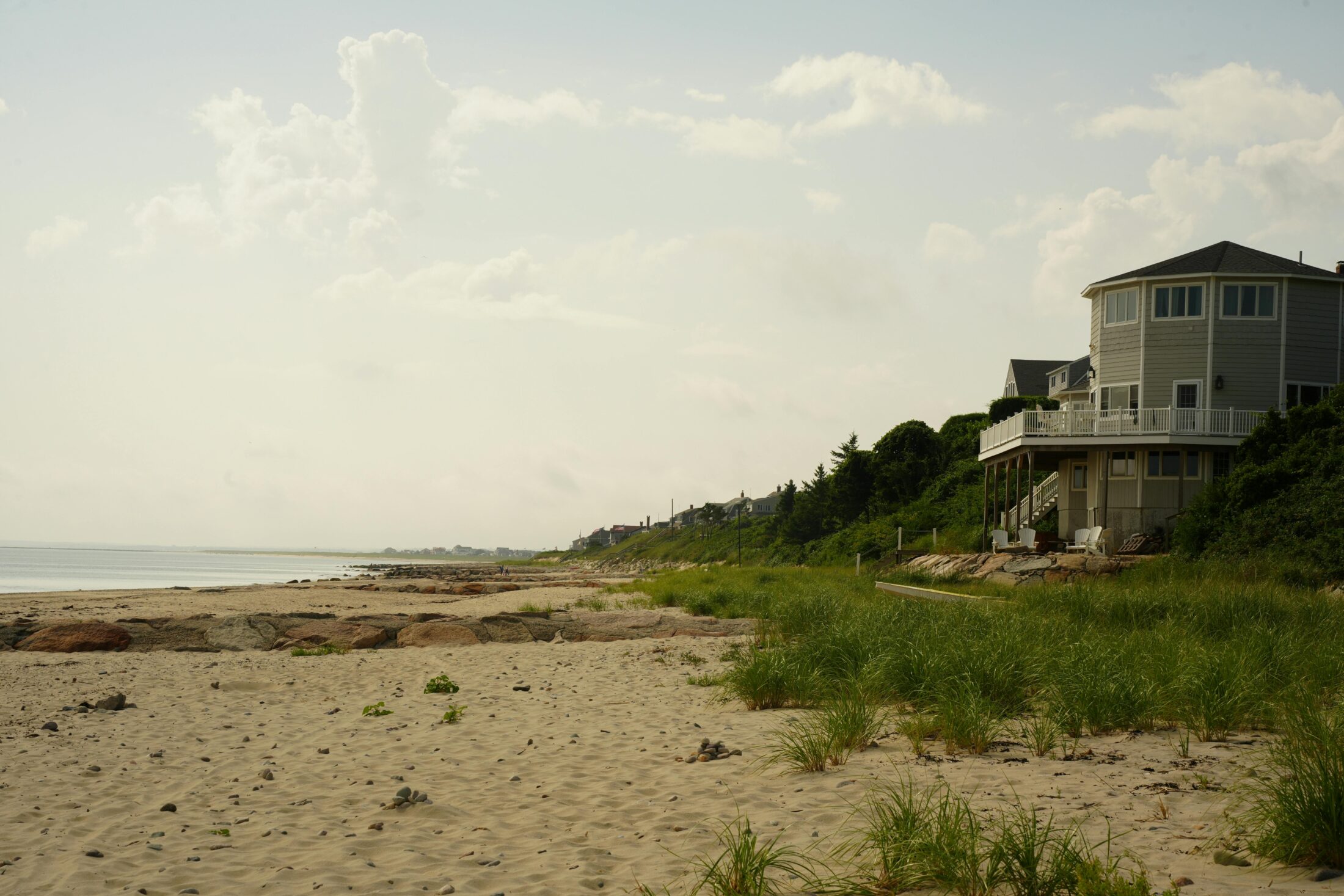
Many National Seashore communities along the East Coast and Gulf Coast still contain historic cottages, family compounds, and seasonal homes that qualify as inholdings.
Owners retain property rights, but those rights are balanced against the federal government’s responsibility to preserve sensitive coastal environments.
Because of this balance, buying an inholding requires careful due diligence. Buyers should review property deeds, easements, zoning overlays, environmental restrictions, and local permitting requirements before closing on the property.
The Authority of the National Park Service
The National Park Service inholding rules help regulate how private property inside protected park boundaries may be used or modified.
Although owners maintain legal title to their homes, significant renovations, expansions, or land alterations may require additional approvals beyond standard municipal permits.
In some situations, the federal government may hold acquisition rights tied to the property’s original agreement or enabling legislation. This can affect future resale transactions or redevelopment opportunities.
Federal agencies also monitor activities that could negatively impact dunes, wetlands, wildlife habitats, or shoreline stability. Unauthorized development or environmental violations can trigger enforcement actions or legal disputes involving both local and federal authorities.

For buyers accustomed to unrestricted coastal ownership, these regulations can feel highly restrictive. However, they are designed to preserve the long-term environmental integrity and scenic character that make National Seashore communities so desirable in the first place.
How Do Cape Cod Seashore Zoning Laws Protect the Land
The Battle Against Development
One of the defining features of protected coastal communities is the strict limitation on new development. In areas surrounding the Cape Cod National Seashore, local governments work closely with federal agencies to ensure preservation goals remain intact.
Cape Cod seashore zoning laws are intentionally restrictive. Municipalities often prohibit large-scale commercial projects, extensive subdivision activity, oversized home additions, or infrastructure expansion that could alter the natural landscape.
The goal is not simply to limit growth, but to protect dunes, salt marshes, wildlife corridors, groundwater quality, and public shoreline access. These regulations also help preserve the historic architectural character of many coastal villages located near federally protected land.
For homeowners, this means future property improvements may require additional planning board reviews, conservation commission approvals, or environmental impact assessments before construction can begin.
The Suspension of Condemnation
An important legal protection exists for compliant property owners within the National Seashore boundaries.
As long as homeowners follow applicable Cape Cod seashore zoning laws and environmental regulations, federal authorities are generally restricted from pursuing condemnation proceedings against the property.
This legal framework provides an important layer of security for private owners while still supporting long-term preservation goals. Compliance becomes the key factor that allows private ownership and federal conservation efforts to coexist successfully.
Because these rules can vary between towns and individual properties, working with experienced local real estate professionals and legal advisors is essential before purchasing an inholding.
How Does a Coastal Property Life Estate Agreement Work
Trading Ownership for Time
A coastal property life estate agreement allows a homeowner to transfer ownership of a property to the federal government while retaining the legal right to continue living in the home for a specified period or for the remainder of their lifetime.
Life estate agreements became particularly common during the establishment of certain National Seashore areas, where longtime residents wished to remain in their homes while still supporting federal conservation efforts.
Under this arrangement, the homeowner no longer owns the property outright after the agreement is executed. Instead, they maintain a legal right of occupancy under the terms negotiated with the government.
Some agreements last for the homeowner’s lifetime, while others may extend for a fixed number of years depending on the original contract terms.
The Future of the Property
Once the life estate term expires or the homeowner passes away, full possession and control of the property permanently transfer to the National Park Service.
At that point, the property cannot be inherited by children or transferred to future heirs. The federal government assumes complete ownership and determines how the property will be managed moving forward.
For some families, a coastal property life estate agreement provides financial flexibility while preserving the ability to remain in a cherished family home. For others, the inability to pass the property to future generations may be a significant consideration.
Because these agreements involve long-term estate planning implications, buyers and sellers should consult qualified attorneys before entering into any life estate arrangement.
National Seashore vs Standard Coastal Property Comparison
| Ownership Feature | National Seashore Property | Standard Coastal Property |
|---|---|---|
| Zoning Restrictions | Extremely High (Federal/Local) | Standard Municipal Guidelines |
| Condemnation Risk | Present (If zoning is violated) | Extremely Low |
| Future Development | Heavily restricted or prohibited | Allowed (Subject to local permits) |
| Ocean Access | Direct, protected, and public | Often private or restricted |
Key Takeaway: Stewardship Over Ownership
Owning property inside a federally protected coastal region is fundamentally different from traditional homeownership.
Buyers are not simply purchasing real estate — they are becoming temporary stewards of environmentally sensitive land that carries historic, ecological, and public significance.
Understanding national park service inholding rules, complying with local Cape Cod seashore zoning laws, and evaluating legal arrangements such as a coastal property life estate agreement are all essential steps before purchasing within a protected coastal zone.
While national seashore real estate regulations can appear complex, they also preserve the extraordinary natural beauty and limited development that make these coastal communities so rare and valuable.
For the right buyer, purchasing inside a National Seashore offers a uniquely peaceful lifestyle connected to some of the country’s most protected shorelines.
If you are considering buying or selling coastal property within or near protected shoreline areas, call 508-846-2243 or email erin@homesofcapecod.com to discuss your real estate goals and explore available properties with confidence.
Frequently Asked Questions
Can I build a new house on vacant land within a National Seashore?
In most cases, new construction inside National Seashore boundaries is heavily restricted or prohibited. Approval depends on local zoning regulations, environmental impact reviews, and federal oversight requirements.
What happens to my property if I violate local Cape Cod seashore zoning laws?
Violations may result in fines, mandatory remediation, permit denials, or legal enforcement actions from local or federal agencies. Serious environmental violations can create additional legal complications.
Are short-term vacation rentals permitted under the National Park Service inholding rules?
Short-term rental policies vary by municipality and property classification. Some towns allow vacation rentals with permits, while others impose occupancy limits or seasonal restrictions.
Who is responsible for maintaining public road access to private inholdings?
Responsibility depends on whether the road is municipally owned, privately maintained, or managed through easements involving federal land.
Can I pass a coastal property with a life estate agreement to my children?
No. Once the life estate term expires, ownership permanently transfers to the federal government rather than future heirs.
Do I still have to pay local property taxes if my home is inside a National Seashore?
Yes. Privately owned inholdings remain subject to local property taxes even when located within federally protected boundaries.
How does the National Park Service exercise its right of first refusal?
In situations where acquisition rights exist, the government may review the proposed sale terms before the property transfers to another private buyer. The exact process depends on the deed restrictions and governing agreements attached to the property.