


Leaving your Cape Cod property for the off-season always comes with a mix of relief and quiet concern. The crowds fade, the beaches empty, and the salty air turns sharp as winter approaches.
But while the peninsula slows down, the risks to your unattended home quietly increase. From sudden cold snaps to powerful coastal storms, the off-season can be unforgiving if your property isn’t properly prepared.
Many homeowners assume locking up and shutting off utilities is enough. In reality, vacant homes face a unique combination of environmental and security challenges that require a more thoughtful approach.
Protecting your investment means planning ahead, layering safeguards, and ensuring someone—or something—is always keeping an eye on things. That’s where a well-rounded strategy comes into play.
Whether you’re a seasonal homeowner or an investor, understanding Cape Cod vacant home security is essential for long-term peace of mind and reliable seasonal property protection Cape Cod homeowners can depend on.
Done right, it ensures consistent Cape Cod home safety even when you’re miles away.
What Is the Best Strategy for Cape Cod Vacant Home Security
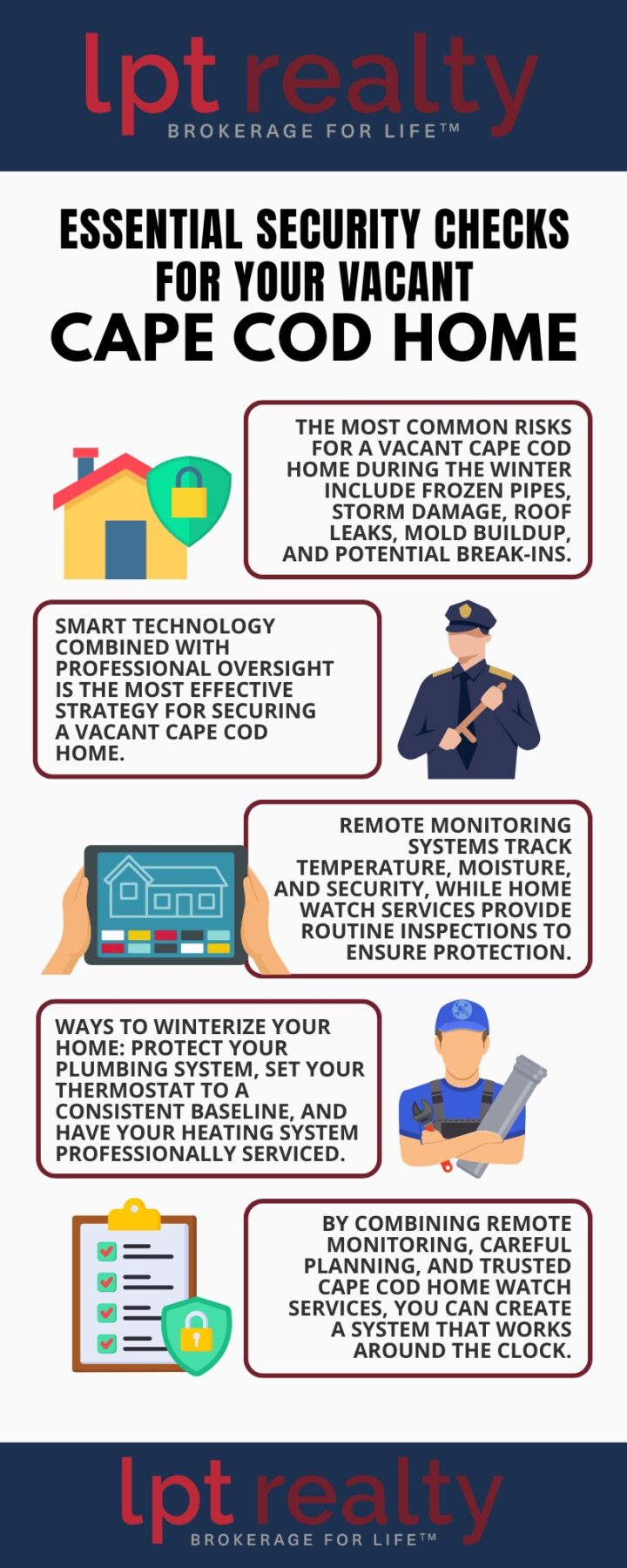
The most effective strategy for securing a vacant Cape Cod home combines smart technology with professional oversight. Remote monitoring systems track temperature, moisture, and security, while home watch services provide routine inspections, ensuring both immediate alerts and physical verification for complete seasonal property protection.
Understanding the Importance of Cape Cod Home Safety
Weather Vulnerabilities
Cape Cod’s beauty comes with a price—especially in winter. The region is exposed to harsh coastal elements that can wreak havoc on unattended homes.
Freezing temperatures can cause pipes to burst, leading to significant water damage before anyone notices. Nor’easters bring powerful winds that can loosen shingles, damage siding, or topple trees.
Meanwhile, moisture from melting snow or coastal humidity can seep into unnoticed areas, creating mold or structural issues.
Cape Cod home safety depends heavily on anticipating these threats and putting systems in place to catch problems early—before they escalate into costly repairs.
Deterring Intruders
An empty home tends to stand out, particularly in quieter off-season neighborhoods. Overgrown yards, dark windows, and untouched driveways can signal that no one is around.
Simple deterrents go a long way. Timed interior and exterior lighting, regular landscaping, and visible security cameras can make your home appear occupied.
Even something as routine as having mail collected or snow cleared promptly can discourage unwanted attention.
Implementing Remote Monitoring for Coastal Properties
Smart Home Technology
Technology has become a game changer for absentee homeowners. Remote monitoring for coastal properties allows you to stay connected to your home from anywhere in the world.

Modern systems can send real-time alerts directly to your phone if something goes wrong—whether it’s a sudden drop in temperature, a water leak, or unexpected motion inside the house.
This immediate feedback is critical in preventing minor issues from turning into major disasters.
Environmental Sensors
Beyond basic security, environmental sensors are essential for Cape Cod homes. Smart thermostats help maintain safe indoor temperatures, reducing the risk of frozen pipes. Leak detectors placed near plumbing fixtures can catch water issues early.
Even more advanced setups include automatic water shut-off valves. If a leak is detected, the system can stop water flow instantly—potentially saving thousands in damage repair.
The Benefits of Professional Cape Cod Home Watch Services
Physical Inspections
While technology is powerful, it can’t replace the value of a trained set of eyes. Professional Cape Cod home watch services provide routine, scheduled inspections that go far beyond what cameras can capture.
A home watch professional will check for signs of roof damage, inspect windows and doors, look for pest activity, and identify subtle issues like slow leaks or drafts. These are the kinds of problems that often go unnoticed until they become serious.
Emergency Response
Perhaps the biggest advantage is having someone local who can act quickly. After a storm or unexpected alert, a home watch provider can visit your property immediately, assess the situation, and coordinate repairs if needed.
For out-of-state homeowners, this kind of rapid response offers unmatched peace of mind. You’re not scrambling to find help during an emergency—it’s already in place.
Steps for Winterizing Vacation Homes in Massachusetts
Plumbing and Heating
Winterizing vacation homes in Massachusetts starts with protecting your plumbing system. Exterior faucets should be drained and shut off, and interior pipes insulated where necessary.
Set your thermostat to a consistent baseline—typically no lower than 55°F—to prevent freezing. It’s also wise to have your heating system professionally serviced before you leave, ensuring it operates reliably throughout the winter.

Exterior Preparation
Your home’s exterior needs just as much attention. Secure or store outdoor furniture to prevent damage from high winds. Clean gutters thoroughly to reduce the risk of ice dams, which can lead to roof leaks.
Trim any overhanging branches that could snap under heavy snow and damage your roof or siding. These proactive steps help maintain the structural integrity of your home through the harshest months.
Seasonal Property Protection Comparison Table
| Security Method | Initial Cost | Ongoing Effort | Level of Protection |
|---|---|---|---|
| Basic DIY Setup | Low | High (Relies on Neighbors) | Minimal |
| Smart Monitoring Only | Moderate | Low | Moderate (No Physical Checks) |
| Professional Home Watch | Moderate to High | Zero | High (Visual Verification) |
| Comprehensive (Smart + Watch) | High | Zero | Maximum seasonal property protection in Cape Cod |
Key Takeaway
Securing your home for the off-season isn’t about relying on a single solution—it’s about building a layered defense. Smart technology keeps you informed, winterization protects against environmental damage, and local professionals ensure nothing is overlooked.
By combining remote monitoring for coastal properties, careful planning when winterizing vacation homes in Massachusetts, and trusted Cape Cod home watch services, you create a system that works around the clock.
That’s the gold standard for Cape Cod vacant home security—and the best way to ensure long-term Cape Cod home safety and dependable seasonal property protection Cape Cod homeowners can trust.
If you want your property to stay safe, secure, and truly worry-free this winter, it’s worth having a trusted local expert in your corner. A tailored plan can make all the difference—especially when storms roll in and temperatures drop fast.
Reach out today at 508-846-2243 or email erin@homesofcapecod.com to discuss a personalized strategy for your home.
Frequently Asked Questions
What are the most common risks for a vacant home on Cape Cod during the winter?
The biggest risks include frozen pipes, storm damage from nor’easters, roof leaks, mold from moisture buildup, and potential break-ins due to visible vacancy.
How much do Cape Cod home watch services typically cost per month?
Costs vary depending on property size and visit frequency, but most services range from $150 to $500 per month.
Does turning off the water main completely protect against frozen pipes?
It helps significantly, but it’s not foolproof. Residual water in pipes can still freeze, so proper drainage and insulation are also important.
Are remote monitoring systems reliable during frequent coastal power outages?
Many systems include battery backups and cellular connectivity, allowing them to function even when power is temporarily lost.
How often should a vacant property be physically inspected?
Most experts recommend at least weekly inspections during the winter months, especially after major storms.
Do insurance companies offer discounts for installing smart leak detectors?
Some insurers do offer discounts or incentives for installing monitored safety systems, particularly those that reduce water damage risk.
What is the first step in winterizing vacation homes in Massachusetts?
Start with a full property assessment—identify vulnerabilities, service your heating system, and create a checklist for plumbing, insulation, and exterior maintenance.